
Cart
You have no items in your shopping cart
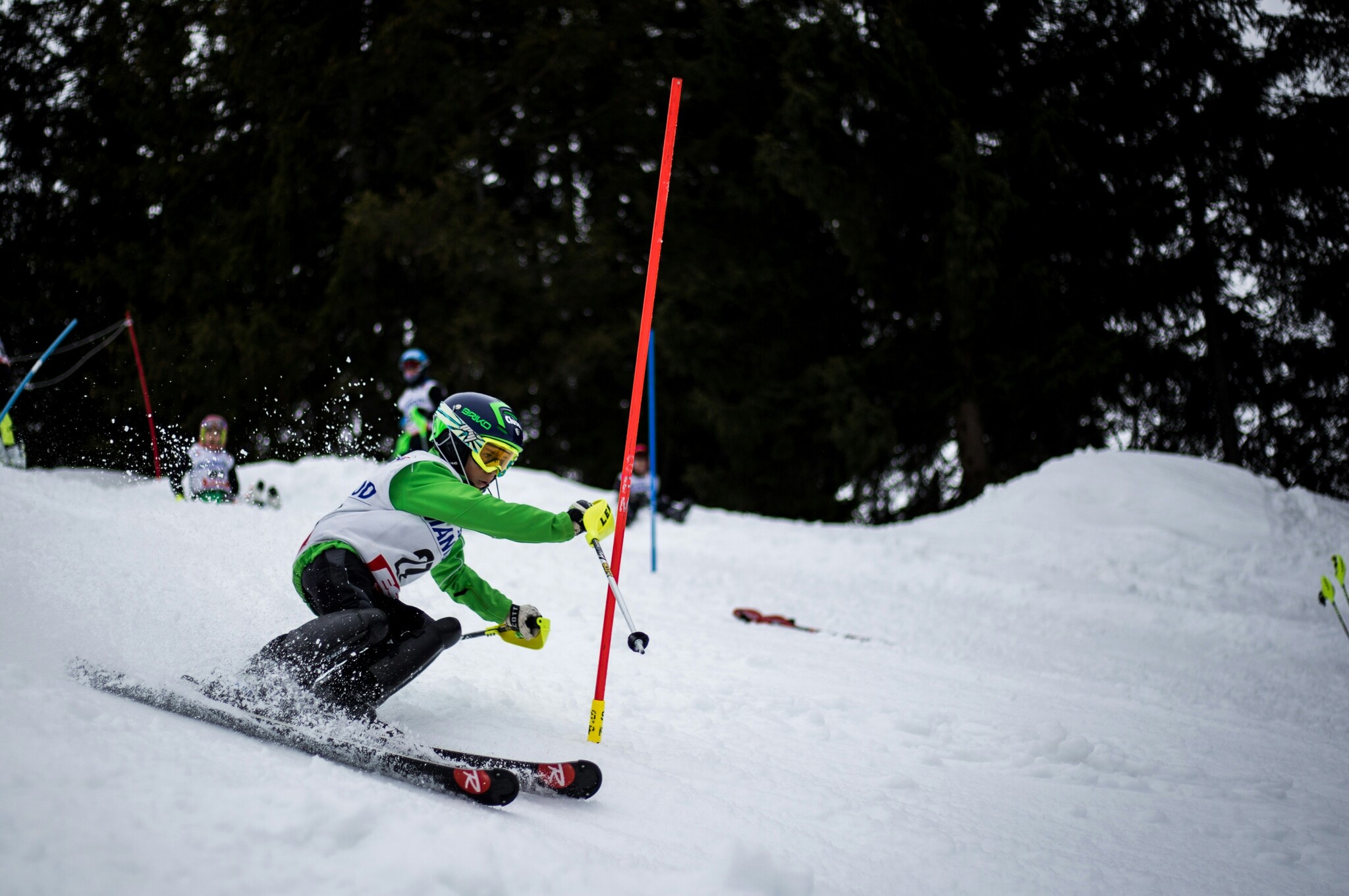
Giant Slalom (GS) and Slalom (SL) require very different equipment setups. GS prioritizes speed, power, and stability. SL focuses on precision, quick reactions, and rapid direction changes. Because of these differences, skis, poles, bindings, and tuning must be matched to each discipline.
Understanding how GS and SL differ helps racers choose the right equipment, avoid costly mistakes, and stay competitive and safe.
Giant Slalom and Slalom sit at opposite ends of the technical skiing spectrum.
Giant Slalom
Slalom

Because of these differences, competitive racers require dedicated skis for each discipline. Using the wrong ski immediately limits performance.

Why this matters GS skis store and release energy through longer arcs. SL skis pivot and redirect quickly through tight gate combinations.
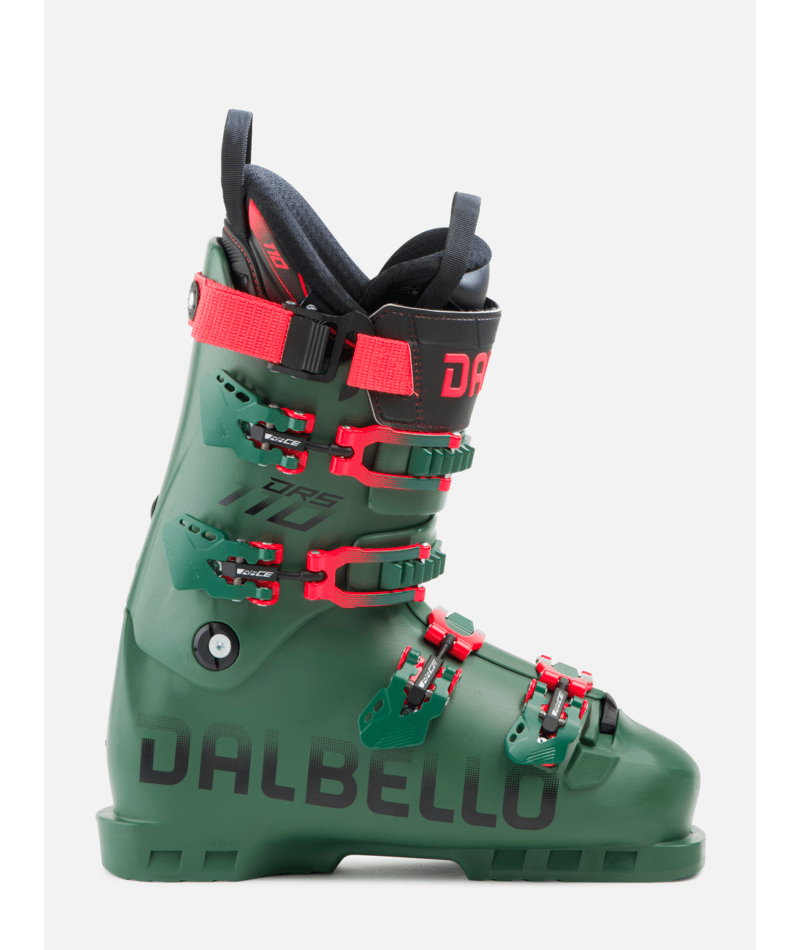
For the vast majority of racers, one properly fitted race boot is used for both GS and SL. Over 90% of athletes, from juniors through many advanced competitors, ski both disciplines in the same boot.
Performance differences between GS and SL come from ski choice, tuning, and technique, not from switching boots.
A well-fitted boot should feel predictable and supportive in both disciplines.
Separate GS and SL boots are uncommon and typically limited to:
Even at this level, the decision is deliberate and highly individualized.
Our licensed technicians focus on fitting one race boot that performs consistently across disciplines, including:
Consistency builds confidence, reduces fatigue, and supports long-term development.
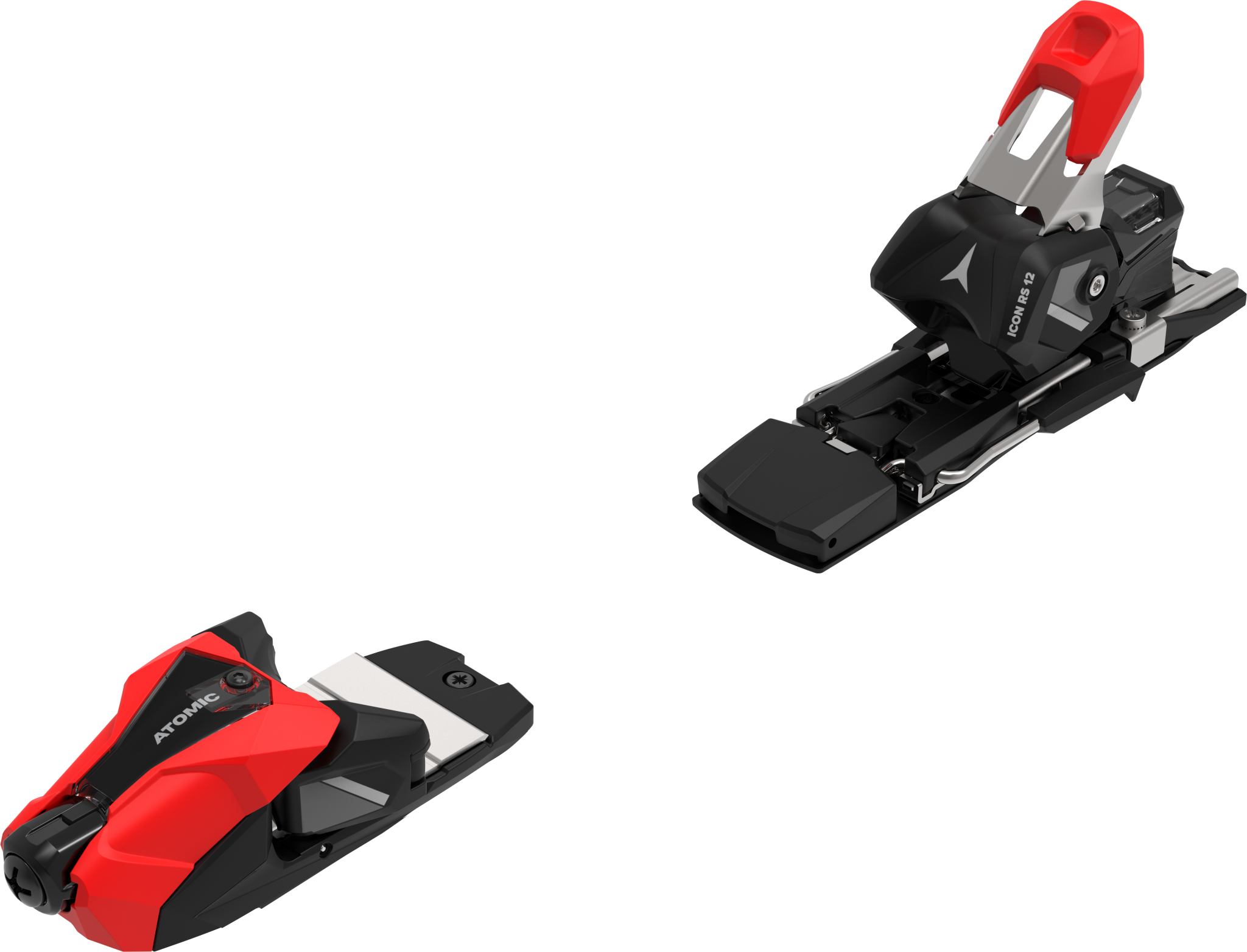
All mounting should be performed by certified technicians based on ski model, boot sole length, and discipline.
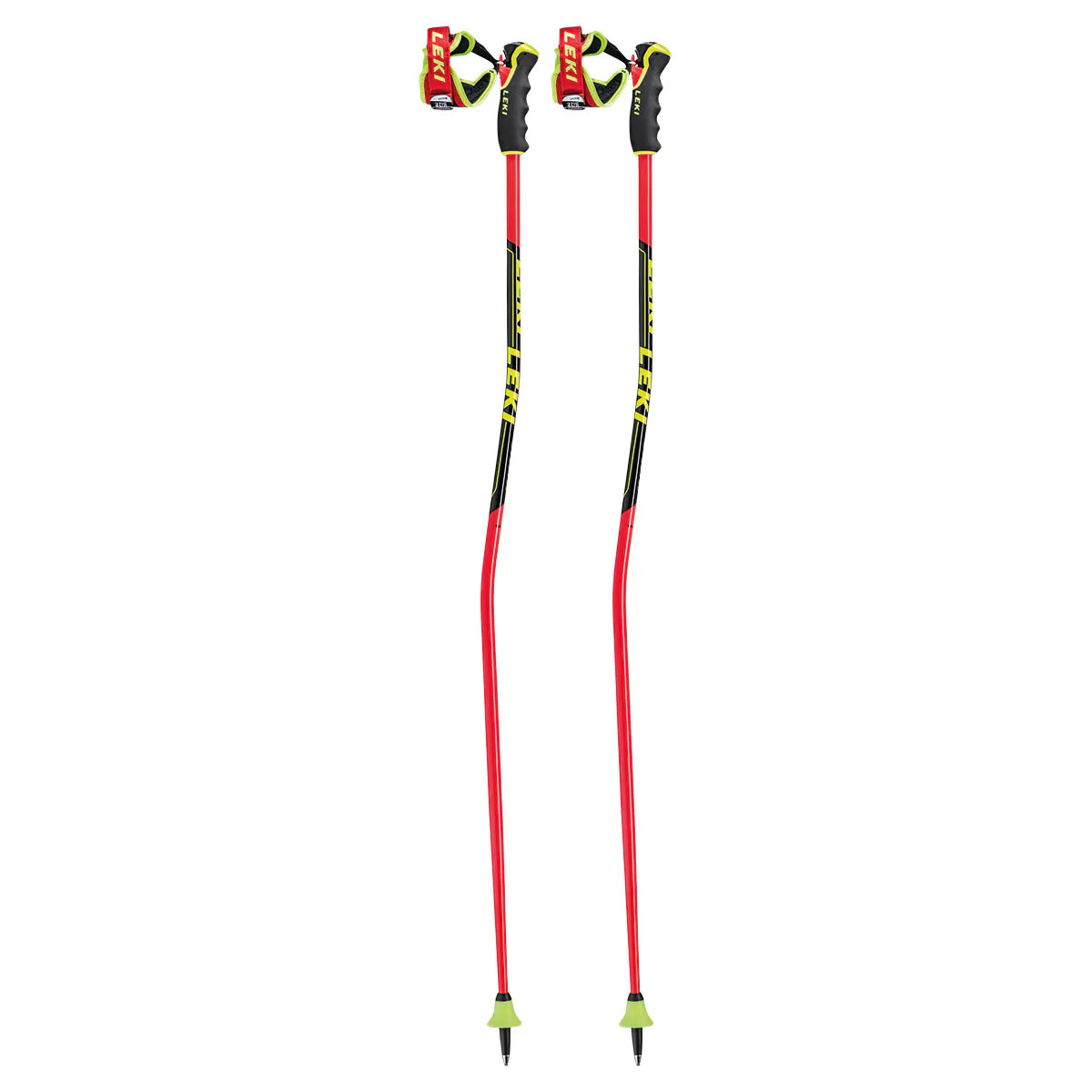
Pole differences between GS and SL are subtle, not extreme. Proper measurement matters more than height estimates.
Correct sizing method Measured upside down with the hand directly under the basket, the elbow should form a 90-degree angle.
Key characteristics
GS poles are typically the same size or one size longer than SL poles.
The slight increase supports:
GS poles may be straight or curved to contour around the body for better aerodynamics.
Giant Slalom
Slalom
Giant Slalom
Slalom
Professional tuning should reflect actual race conditions.
|
Feature |
Giant Slalom (GS) |
Slalom (SL) |
|---|---|---|
|
Ski Length |
Top of head to slightly above head. Typically 15–20cm longer than SL |
Mouth to eyebrow height |
|
Turn Radius |
Minimum 21m. 27m for some FIS categories |
Minimum 12m. 13m for some FIS categories |
|
Flex Pattern |
Stiffer throughout |
More flexible and responsive |
|
Boot Setup |
Same boot as SL for most racers |
Same boot as GS for most racers |
|
Boot Lifts |
May be slightly taller for leverage |
Typically lower for faster transitions |
|
Pole Length |
Same size or one size longer than SL |
Sized using elbow at 90° method |
|
Side Edge Angle |
2°–3° |
3°–4° |
|
Base Structure |
Coarser for high speed |
Finer for lower speed |
|
Gate Spacing |
25–27 meters |
7–11 meters |
No. The construction and geometry differences are too significant. Competitive racers need dedicated skis for each discipline.
Most racers use the same boots. Separate boots are rare and typically limited to elite FIS athletes.
Touch up edges every 2–3 ski days at home. Professional tuning every 8–10 days for GS and 6–8 days for SL, with fresh tuning before races.
Proper tuning makes the biggest immediate difference. Well-tuned skis outperform poorly tuned high-end models.
Most programs introduce Slalom first.
Start with SL if:
Progress to GS when:
GS and SL demand distinct equipment setups. While this requires greater investment over time, proper skis, professional boot fitting, correct pole sizing, and discipline-specific tuning are essential for performance and safety.
At Peak Performance, we specialize in race-specific equipment, professional boot fitting, and precision tuning. Our team understands the technical demands of GS and SL and helps racers build setups that match their goals.

Comments
Be the first to comment...