
Cart
You have no items in your shopping cart
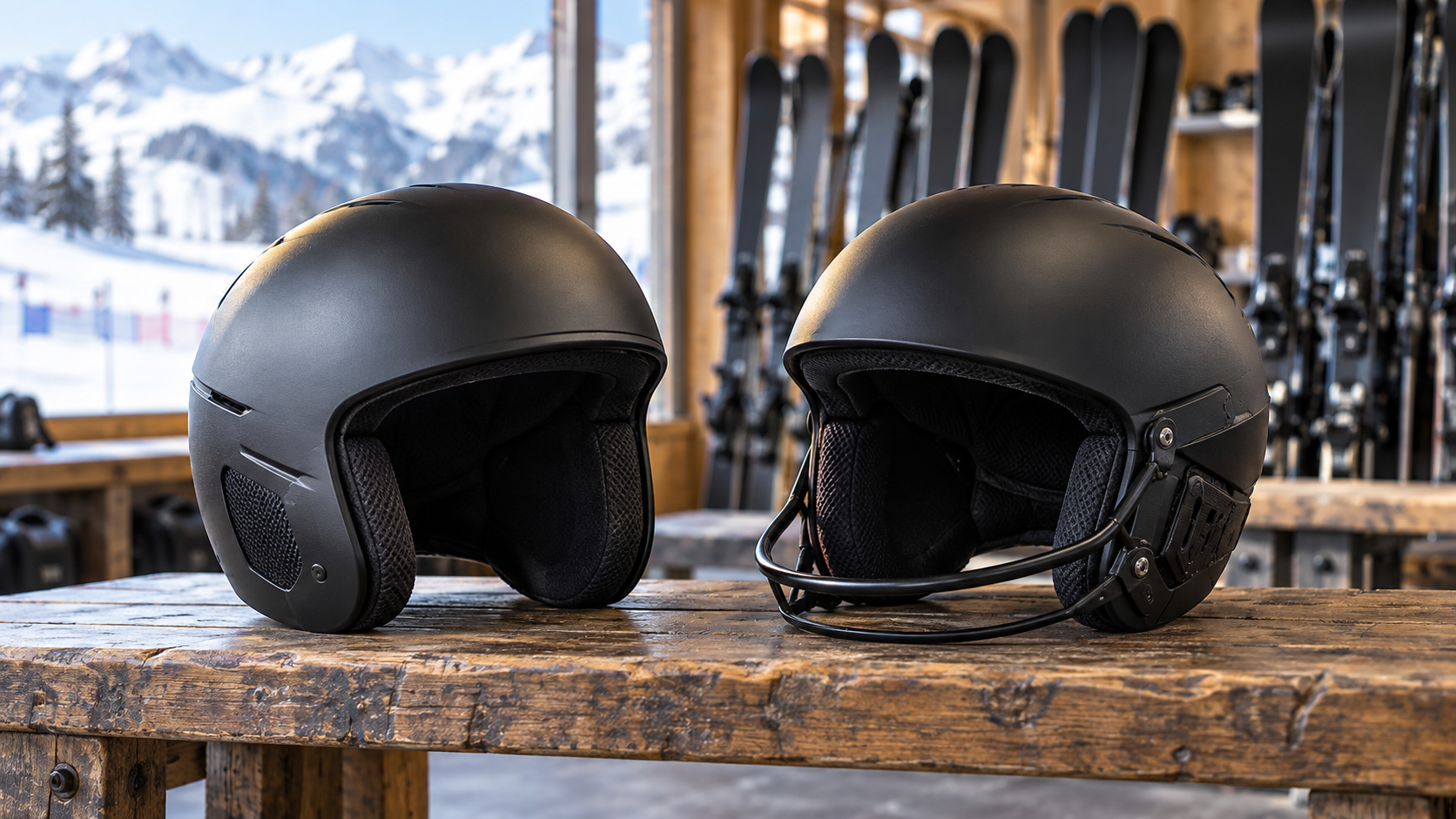
GS vs. slalom race helmets: what separates them, how a removable chin bar lets one helmet cover both events, and when two helmets make sense.
A GS helmet and a slalom helmet are built differently, even though both are made for racing. A GS helmet has a full hard-ear shell and carries FIS RH 2013 certification for GS, Super-G, and Downhill. A slalom helmet is built around a chin guard for gate contact and often has lighter soft-ear padding. The good news for parents: many junior racers do not need two helmets. They wear a hard-ear GS helmet and add a removable slalom chin bar for Slalom. As racers get older, many move to two event-specific helmets so there is nothing to swap.
Here is what actually separates the two, and how to choose the setup that fits your racer.
Both helmet types are made for gate racing, but they protect against different things.
A GS helmet uses a hard-ear shell, which means the shell wraps down over the ears for full coverage. GS, Super-G, and Downhill are faster events, so the helmet is built to protect the whole head in a hard fall. GS helmets carry FIS RH 2013 certification, the standard needed for those events. Our guide on when a FIS-certified helmet is required covers the details.
A slalom helmet is built for a different problem: repeated contact with gates. It uses a chin guard to deflect gate hits away from the face and jaw, and many models use lighter soft-ear padding. That keeps the helmet light and helps racers hear their coach. A slalom-only helmet is not approved for GS, Super-G, or Downhill.
A GS helmet is the heavier, more fully covered of the two. The extra shell adds protection for the kind of high-speed fall that GS, Super-G, and Downhill can produce. It is the helmet your racer needs the moment one of those events is on the schedule.
A GS helmet does not usually come with a chin guard, but most brands let you add one. The Atomic Redster GS pairs with a click-in Atomic Redster Chin Guard. The HEAD Downforce MIPS swaps its adapters to take a chin guard for technical events. The POC Skull Dura Comp MIPS works with the Maxilla Breakaway Chin Guard. That is why a hard-ear GS helmet is the most common starting point for junior racers.
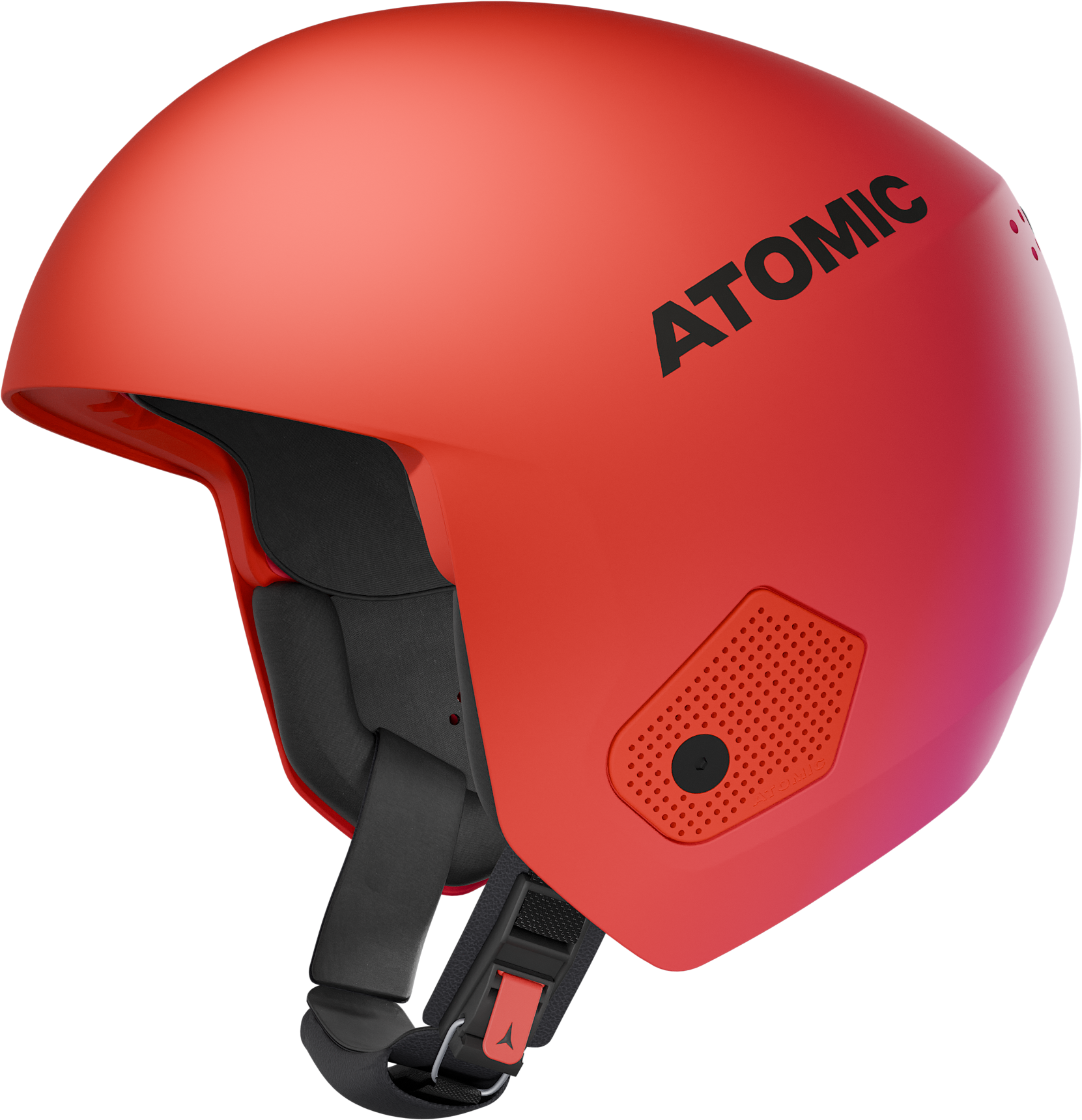
The Atomic Redster GS pairs with a click-in chin guard for Slalom.
A slalom helmet is lighter and built around the chin guard. Some come with one included. The Atomic Redster SL, for example, ships with a height-adjustable chin guard that has three settings. Soft-ear padding, where a helmet uses it, trims weight and makes it easier to hear on course.
A slalom-only helmet cannot replace a GS helmet. If GS, Super-G, or Downhill is on the schedule, your racer needs a FIS-certified GS helmet.
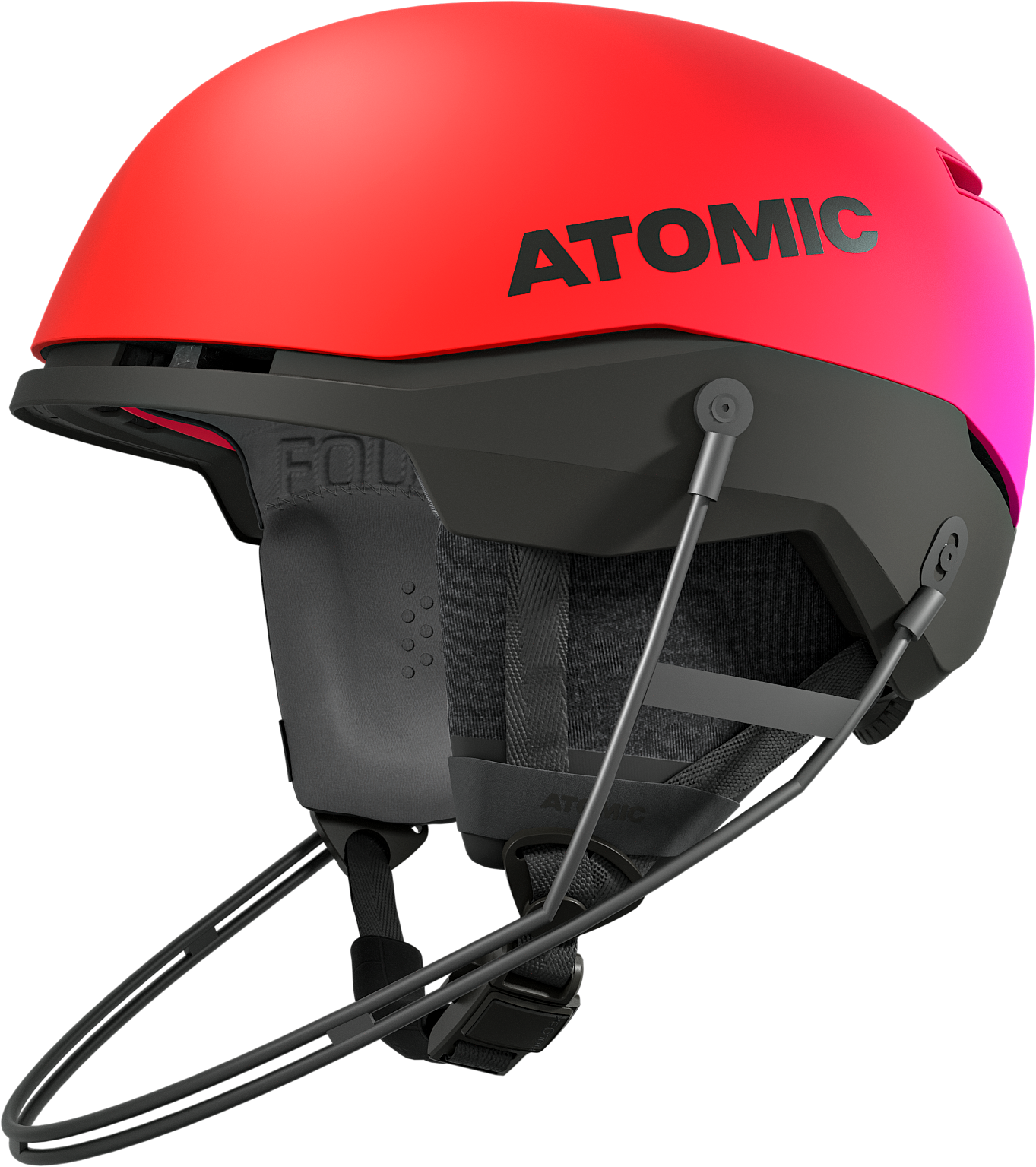
The Atomic Redster SL comes with a height-adjustable chin guard.
| Feature | GS Helmet | Slalom Helmet |
|---|---|---|
| Shell | Hard-ear, full coverage | Often soft-ear padding |
| Chin guard | Not standard, removable chin bar available on most brands | Built in or included |
| FIS RH 2013 | Yes, needed for GS, Super-G, and Downhill | Not approved for GS, Super-G, or Downhill |
| Weight | Heavier | Lighter |
| Best for | GS, Super-G, Downhill, and Slalom with a chin bar added | Slalom |
Racers who do both Slalom and GS have two good options.
If budget is tight, start with the hard-ear GS helmet and add the chin bar later. Chin bars are matched to the helmet brand and model, so choose the helmet first, then shop for the chin guard that fits it. Check your racer's event equipment rules with their coach, and see our Junior GS Helmet Sizing guide for help with fit.
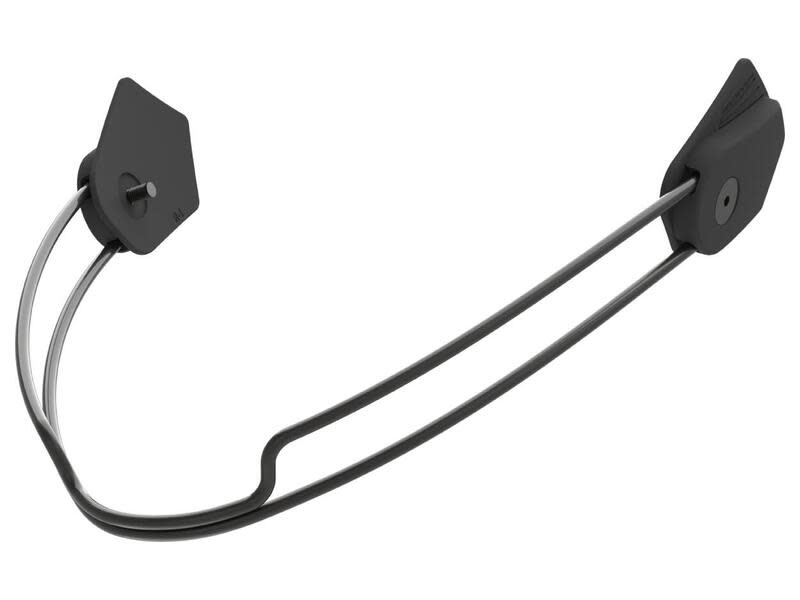
The Atomic Redster Chin Guard clicks into Atomic Redster helmets, including junior models.
No. A slalom-only helmet is not approved for GS, Super-G, or Downhill. A FIS-certified GS helmet is required for those events.
In most cases, yes. Most hard-ear GS helmets accept a removable slalom chin bar that you add for Slalom and remove for GS or speed events. Some racers prefer a dedicated slalom helmet for the lighter weight and no swapping. Check your event's equipment rules with your coach.
It is a removable chin guard that attaches to a GS helmet. It helps deflect gate contact away from the jaw and face in Slalom. Chin bars are matched to the helmet brand and model, so they are not interchangeable between brands.
Hard-ear shells give fuller coverage and are the standard for GS and speed events. Soft-ear padding is lighter and helps with hearing on a slalom course, and it only suits helmets certified for that discipline.
Not at first. Many junior racers use one hard-ear GS helmet and add a removable slalom chin bar. Two event-specific helmets cost more but are the most convenient, and many racers move to that setup as they get older.
Browse our FIS-certified GS helmet collection and our Slalom Helmet collection, or stop by our Killington shop and we will help match the right setup to your racer's schedule. Need a chin bar for a GS helmet? Check the brand and model first, then see our Chin Guards collection.
Comments
Be the first to comment...