


Cart
You have no items in your shopping cart
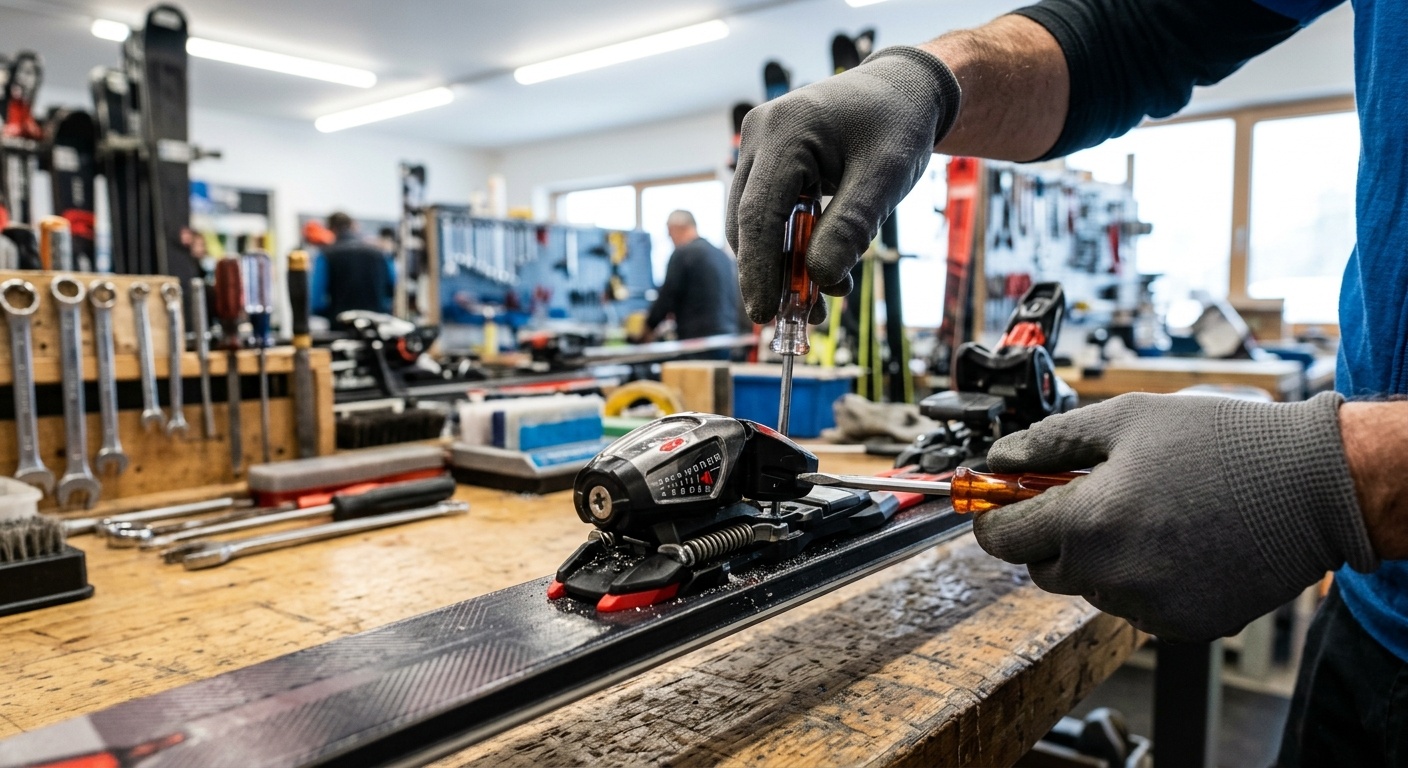
Learn how DIN settings work on race bindings under the ISO 11088 standard, and why release value should always be set and tested by a certified technician.
A DIN setting is the release force on a ski binding, calculated from weight, height, boot sole length, and skiing ability under the ISO 11088 standard. Race bindings are set using the same ISO standard as recreational bindings. Many racers choose to set their release value above the chart-calculated number because of the forces involved in racing, but that decision is made by the athlete, parents, and coaches, since a shop cannot recommend going outside the standard chart itself.
If you have looked up a generic DIN chart and the number looked low for a racer, that is a common starting point, not a mistake. The chart is the same for everyone. What often differs is the decision a racer, their parents, and their coach make once they have that number.
The number on your binding's toe and heel piece controls how much force it takes for your boot to release. Too low, and the binding pops off on rough terrain or hard gate contact. Too high, and it may not release when it should, which is the more dangerous of the two mistakes.
That number comes from a lookup process defined in the ISO 11088 standard, the international standard that replaced the older DIN 7881 spec ski shops used for decades. The inputs are weight, height, age, boot sole length, and a skier type from 1 through 3+.
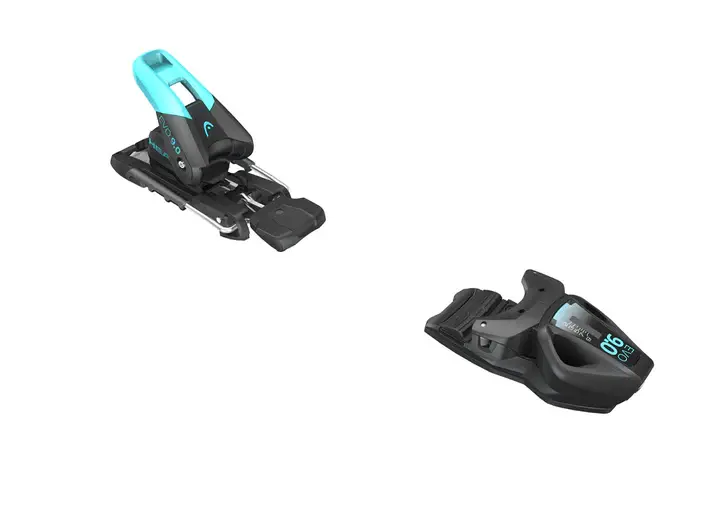
A race binding's toe and heel piece control the release force, set to the ISO 11088 standard.
Peak Performance sets every binding using the ISO 11088 standard. There is no separate scale for rating racers, and the chart itself does not change based on the brand of binding.
What differs for many racers is the decision made once that chart number is calculated. Gate contact, hardpack and icy courses, and higher speeds put more force through a binding than typical recreational skiing does, and that leads many racers, together with their parents and coaches, to choose a release setting above what the standard chart calculates for their measurements. That decision belongs to the athlete and their support team. A shop cannot tell a racer what to set outside the standard chart, since doing so carries liability considerations.
Peak Performance's technicians will set and test a binding to whatever value a racer, parent, or coach requests, including a setting outside the standard chart range, once that decision has been made. This is also part of why our Atomic Race Bindings Explained guide separates the Icon and Colt lines by ability level. A Colt binding is built around a junior racer's lower release range, while the Icon lineup climbs into the range a FIS-level or masters racer typically needs.
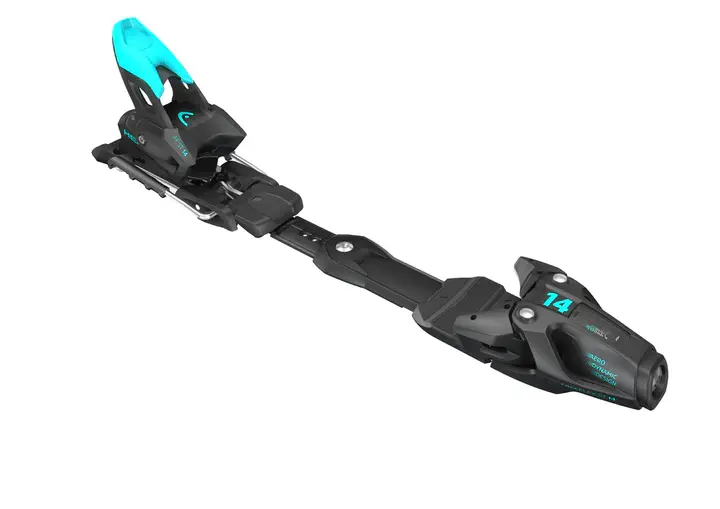
A higher range race binding like the Freeflex 14, built to handle release settings well above a recreational chart.
Match the racer to the binding's rated range, not just the chart number. A racer's calculated DIN needs to fall inside what their specific binding is built to handle, and a binding at the bottom of its range behaves differently than one near the top of the same range. If a racer's number is creeping toward the top of a binding's range, that is usually the sign it is time to move up to a higher model, not a sign to push the current binding past what it is rated for.
An online calculator can give a starting estimate, but it should never be the final word for a racer. Peak Performance's technicians set and test release values by hand using calibrated equipment, checking the actual release torque against the target range rather than trusting the dial alone. Bindings should be tested at least once a season and immediately after any hard crash. Get bindings professionally mounted and tested before they touch snow.
It depends on weight, height, boot sole length, and ability level under the ISO 11088 standard. Many racers choose a setting somewhat above the chart-calculated number because of the forces involved in racing, but that decision should be made together by the racer, their coach or parent, and a technician, not by a calculator alone.
A binding set too high may not release during a fall, which raises the risk of a knee or leg injury. A setting that is too low causes the ski to release too easily, which costs control and causes falls of its own.
Not necessarily. Race-specific bindings are built to handle a wider range than recreational bindings, and many racers do run above their chart number. Whether a given setting is appropriate depends on the racer's measurements, ability level, and a technician's judgment, not a fixed cutoff.
No. Even a small adjustment changes how and when the binding releases, and getting it wrong either way creates real risk. Have a certified technician set and test it.
On the standard recreational chart, a DIN around 6 typically fits an intermediate adult skier of average weight and height. That has little bearing on what a racer of the same size might choose once they factor in the forces involved in racing.
DIN setting is not a place to guess. Bring your racer's measurements to the shop, and we will match the right binding from our full range of Atomic race bindings and set it to a value that works for their level, not just their weight.
Comments
Be the first to comment...