
Cart
You have no items in your shopping cart
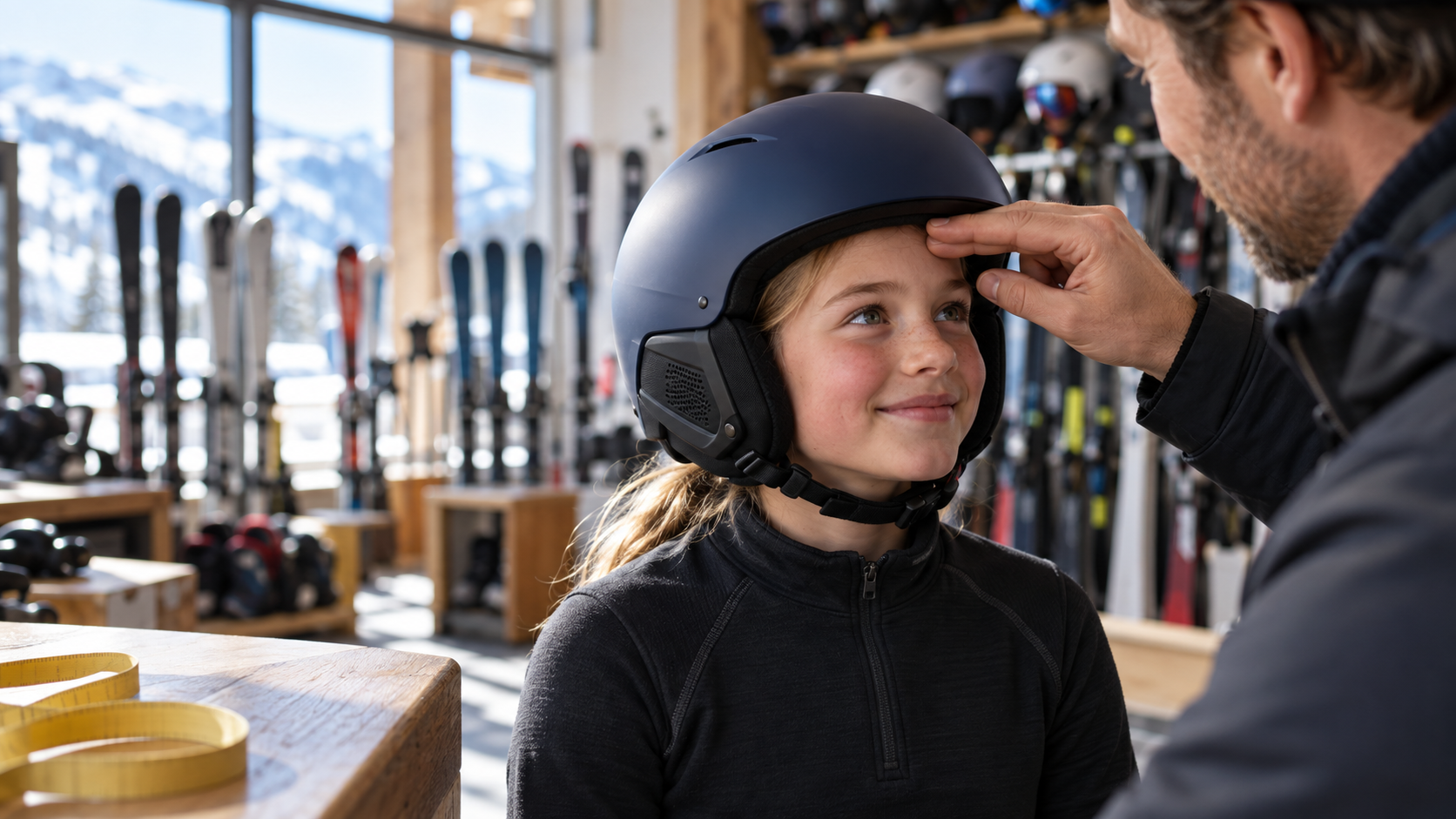
Learn how to measure and fit a junior GS helmet, why you should never size up to grow into it, and when it's time to replace a race helmet.
Measure your racer's head with a soft tape just above the eyebrows and ears, then match that number to the size chart for the specific helmet, not to their age. A correct fit is snug, sits level, and does not shift when your racer shakes their head. Buy for the head they have today and never size up so they can grow into it. Most racers get a few seasons out of a helmet, and any helmet should be replaced right away after a hard impact.
Heads do not grow like feet, so you will not be buying a new helmet every year. Fit still matters more for a race helmet than for almost any other piece of gear, so it is worth checking once a season.
Wrap a soft measuring tape around the widest part of your racer's head, about one inch above the eyebrows and just above the ears. Keep the tape level all the way around. Write the number down in centimeters, since most race helmets are sized by head circumference rather than by age or a general small, medium, or large.
Each brand shapes its helmets a little differently, and each lists its sizes a little differently. The Atomic Redster lists a Medium as 55 to 59 cm, while the HEAD Downforce lists a Medium as 56 to 57 cm. Some junior models, like the POCito Skull, are one-size adjustable and cover a set range of 51 to 54 cm.
That is why trying helmets on matters. Each brand also suits a different head shape, so trying on a few brands is the best way to find the one that fits your racer's head best. Always check the size chart for the exact model before you buy.
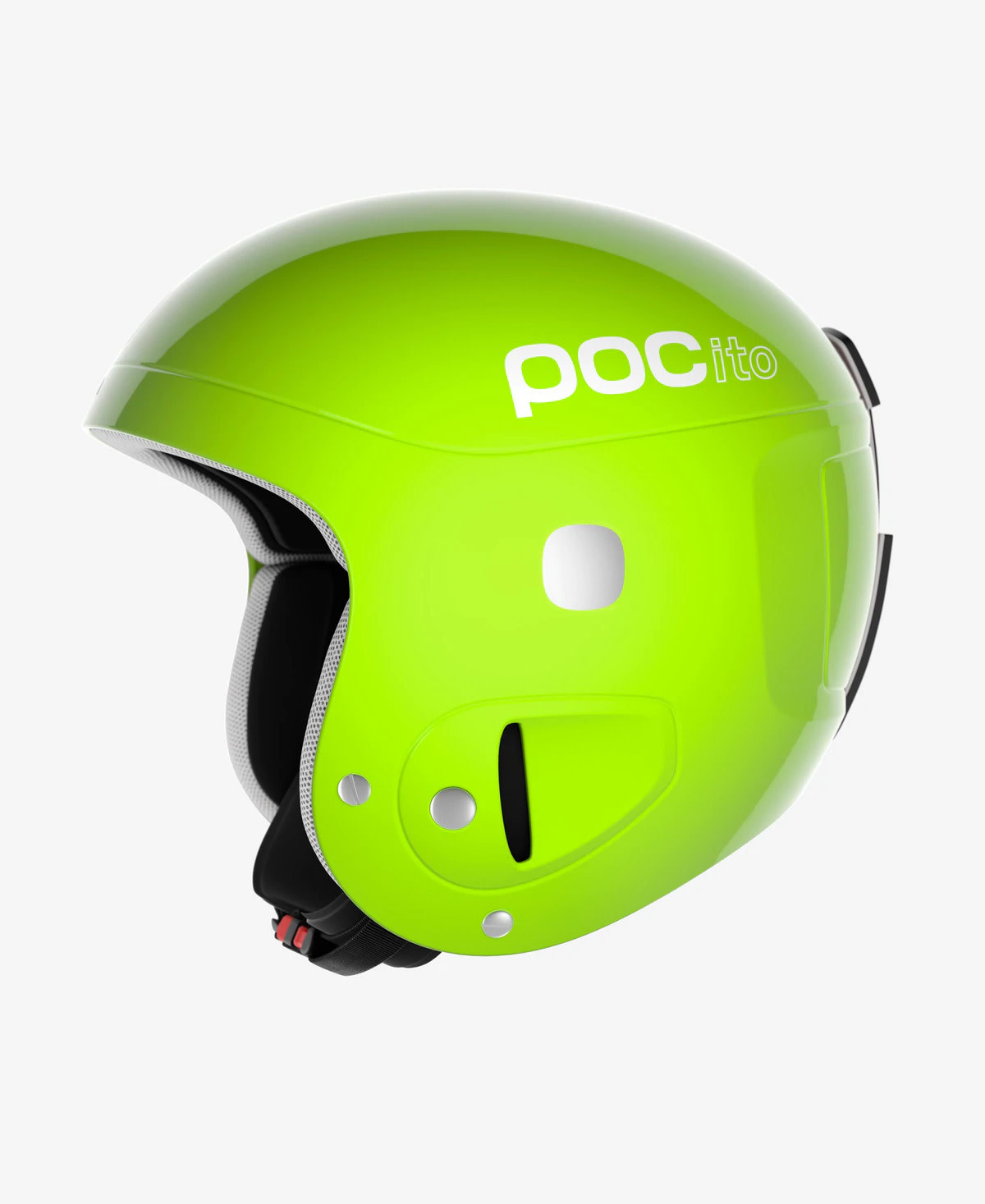
The POCito Skull is made for junior ski racers and fits heads from 51 to 54 cm.
A properly sized helmet should:
If the helmet moves on its own when your racer shakes their head, it is too big, no matter what the chart says. Most race helmets have an internal fit dial for fine-tuning, but that dial adjusts the fit inside a size. It cannot turn a small into a medium.
Most racers get a few seasons from a helmet, so a size change is the exception, not a yearly routine. Remeasure at the start of each season and look for these signs that it is time to move up:
Buy for the measurement your racer has today. Never size up so they can grow into it. A helmet with extra room will not stay in the right position in a fall, which defeats the purpose of a properly fitted helmet.
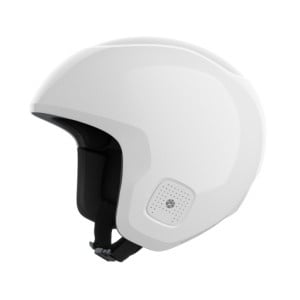
The POC Skull Dura X Jr is a FIS RH 2013-certified junior race helmet in an XS/SM size for 51 to 54 cm heads.
Fit and replacement are two different questions. A helmet that still fits can still need to be replaced.
Replace a helmet right away after any hard impact, such as a crash, a collision, or a serious fall, even if the outer shell looks fine. Ski helmets rely on an EPS foam liner that absorbs impact by deforming or breaking. Salomon's helmet guidance explains that once the foam has done that job, the helmet will not protect the same way a second time.
Beyond a hard impact, also replace a helmet if you notice:
Junior racers can go through helmets a little faster than adults, mostly because they are still developing technique, which can mean more falls. Growth is a smaller factor than most parents expect. It just means a junior racer's helmet is worth checking each season.
The same fitting rules apply to a FIS-certified helmet. The main difference is the shell. A GS helmet has hard-ear coverage, so it can feel different from a recreational helmet, even at the same measured size.
If your racer will add a removable chin bar for Slalom, check the fit with the chin bar attached too. Chin guards are matched to the helmet brand and model, so pick the helmet first, then the chin guard that goes with it.
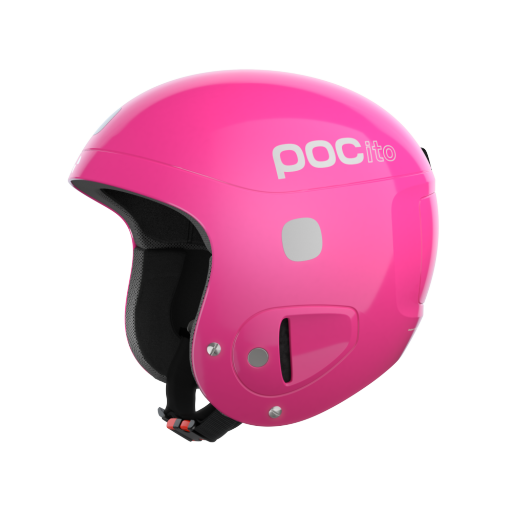
Junior race helmets come in a range of colors and sizes, so it helps to try several on.
No. A helmet with extra room will not stay in the right position during a fall. Heads also grow more slowly than feet, so a correctly fitted helmet usually lasts a few seasons. Buy for the current measurement.
At the start of every season. Most racers get a few seasons from a helmet, but a yearly check catches a tight fit early. Measure again mid-season if the helmet starts to feel snug.
Not every fall, but any fall or collision with real impact to the head, yes, even if the shell looks undamaged. The foam liner absorbs that energy in a way that does not reverse.
Manufacturers and retailers generally suggest replacing a helmet about every five years, depending on how often it is used and how it is stored.
No. Head circumference is measured the same way, but where that number lands on the chart varies by brand and by model. Always check the chart for the exact helmet.
The easiest way to get the fit right is to try helmets on with your racer. Browse our FIS-certified GS helmet collection, or stop by our Killington shop and we will measure your racer and check the fit in person before you buy. If your racer will also need a chin guard, see our Chin Guards collection to complete the setup.
Comments
Be the first to comment...