


Cart
You have no items in your shopping cart
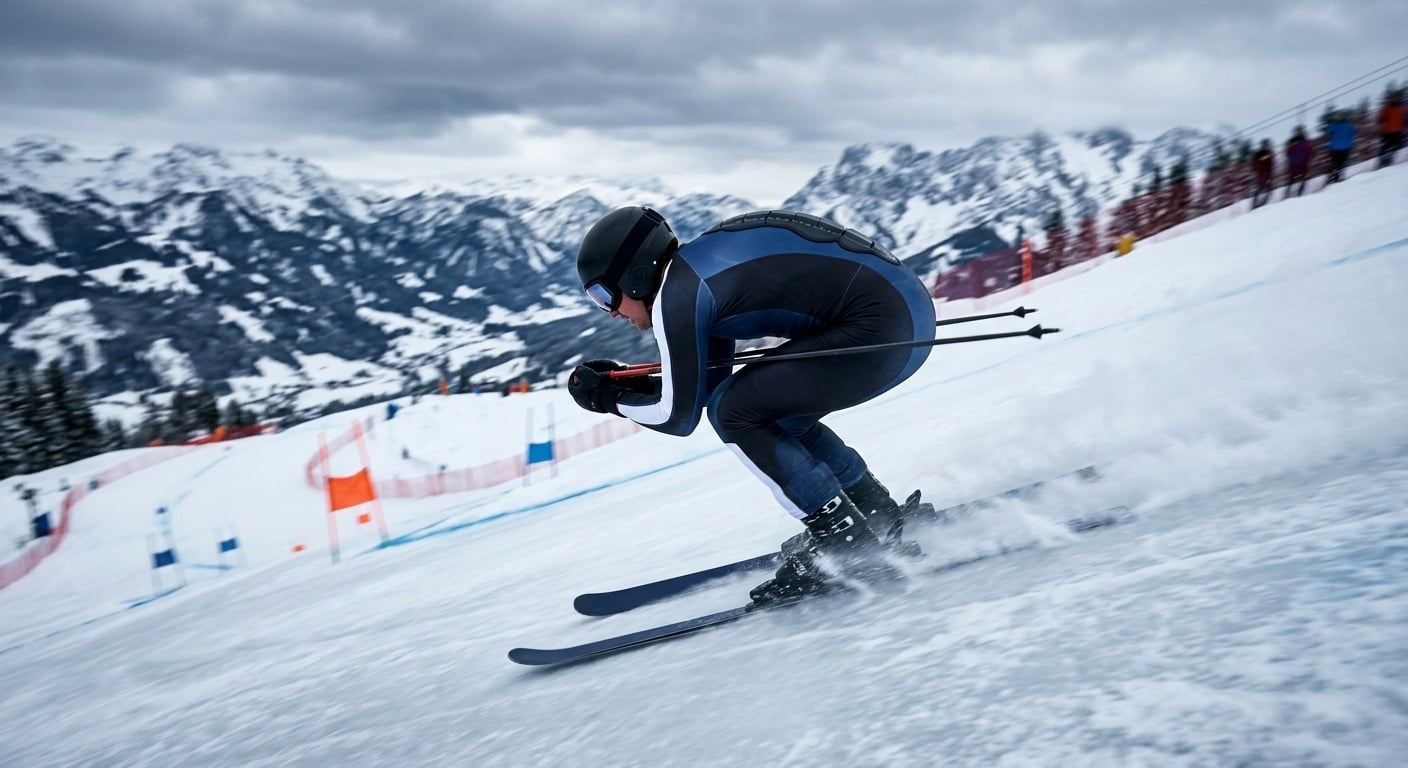
A plain-language breakdown of what FIS actually requires for back protectors in speed events, and how that differs from club and regional-level rules.
FIS does not require standard back protectors for most racers. It leaves that decision to the athlete and their national ski association. What FIS does require, as of October 15, 2025, is an airbag-equipped back protector for anyone racing Downhill or Super G at race level 0 or level 1.
That distinction, between a regular back protector and an airbag protector, is where most of the confusion starts. Here is what the rules actually say and who they apply to.
Under the current FIS Specifications for Alpine Competition Equipment, competitors are allowed to protect any part of the body with protectors, and it remains up to the athlete and their national ski association to decide whether to use one. FIS does not mandate a standard back protector for the general racing population.
FIS does specifically recommend back protectors for younger age groups. The specifications state that children under 12, along with U14 and U16 racers, should use a correctly sized back protector certified to the latest EN 1621-2 standard. That is a recommendation, not a start-list requirement, but it reflects where FIS puts its own safety guidance for junior athletes.
For any back protector used in FIS competition, the specifications set real design limits. The protector must follow the natural curve of the spine and lie flat against the body. Its top edge cannot extend above the 7th cervical vertebra, C7, and its maximum thickness at the middle of the protector cannot exceed 45 millimeters, tapering thinner at the edges. Shaping a protector to improve aerodynamics is explicitly forbidden. The protector must be worn underneath the competition suit, never built into it, and FIS strongly recommends EN 1621-2 certification even though it does not mandate a specific brand or model.
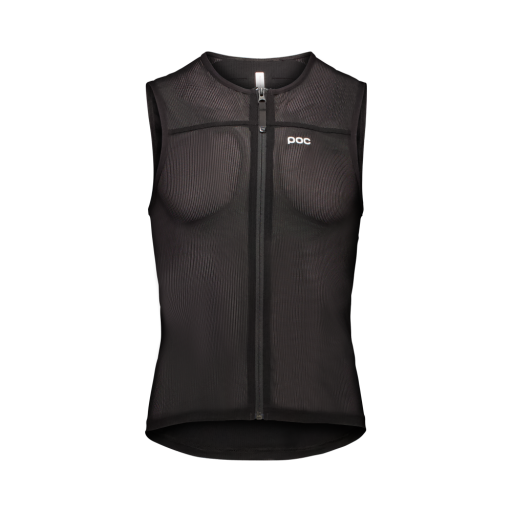
The POC Men's VPD Air Vest, an EN 1621-2, Level 1 certified protector worn under the suit.
This is the rule that actually carries a hard start restriction. For the 2025/2026 season, an airbag-equipped back protector is mandatory for Downhill and Super G at race level 0 and level 1, effective October 15, 2025. Racers without an activated airbag protector are not permitted to start in those events at that level.
There is a carve-out: at NorAm Cup, Far East Cup, and Junior World Championship events, the airbag protector is strongly recommended rather than mandatory. FIS also sets technical specifications for how the airbag must perform, including inflation time under 200 milliseconds and a minimum 3 seconds fully inflated once triggered.
This mandate applies to race level 0 and 1, which covers World Cup, World Championships, the Olympics, and Continental Cups, not typical regional or club-level junior racing.
The FIS specifications above govern international-level competition. Most junior racers training and competing through USSA at the regional and club level are not racing at FIS level 0 or 1, so the airbag mandate does not apply to them directly. USSA and individual race organizers can, and often do, set their own equipment requirements for regional, divisional, and club races, which may be more or less strict than the FIS international rules for the same age group.
For context, U.S. Ski & Snowboard's own Alpine Equipment Regulations publication, the domestic rulebook covering ski length, radius, helmets, ski brakes, and pole baskets by age division, does not set a back-protector-specific national rule of its own. That means back protector guidance for most U.S. junior racers flows from the FIS recommendation described above, layered with whatever a specific region, division, or club chooses to require on top of it.
Because these domestic-level requirements vary by region and by event, check with your racer's coach, club, or USSA regional office for the exact rules that apply to your racer's specific races before assuming FIS's international rules are the whole picture.
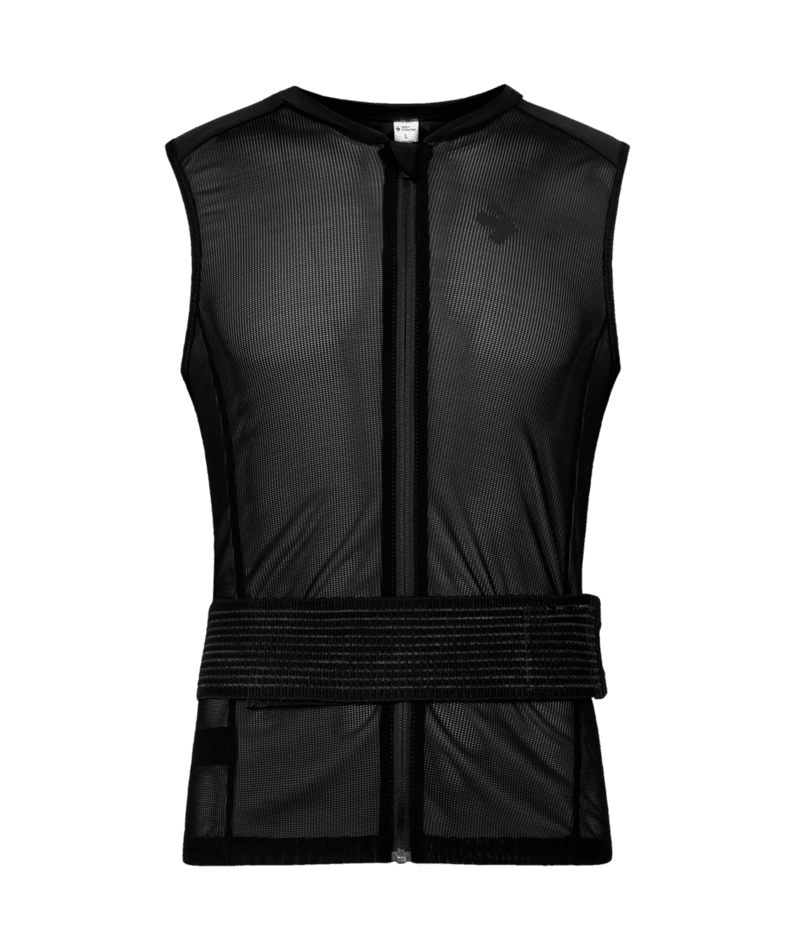
The Sweet Protection Back Protector Vest 2.0 Men's, certified to EN 1621-2:2014, Level 1.
Most of the junior and masters racers we work with are competing well below FIS race level 0 or 1, so the airbag mandate itself typically will not apply. What does apply, at any level, is FIS's own safety guidance: a correctly sized, EN 1621-2 certified back protector for younger racers, worn underneath the suit, never integrated into it. That guidance is a reasonable baseline regardless of what a specific USSA region or club requires on top of it.
A standard back protector is not mandatory under FIS rules. An airbag-equipped back protector is mandatory for Downhill and Super G at race level 0 and 1 as of October 15, 2025.
Not directly. The mandate applies to race level 0 and 1 events, which are international-level competitions. U.S. Ski & Snowboard's own domestic equipment regulations do not set a separate back protector rule, so regional and club-level junior racing typically follows the FIS recommendation described above, plus whatever a club adds on top.
FIS strongly recommends EN 1621-2 certification and specifically recommends it for racers under 12 and for U14 and U16 competitors.
No. FIS specifications require the protector to be worn underneath the competition suit, not integrated into it.
Check with your racer's coach, club, or USSA regional office, since domestic-level requirements can differ from the FIS international rules covered here.
Our team can help fit a correctly sized, certified back protector for your racer and check it against your specific program's requirements. Browse our full junior and adult back protector selection, start with our back protector buying guide for parents if you have not chosen one yet, or check our sizing guide to confirm the right fit. If your racer competes in junior race suits, stop in or call ahead, and we can check protector and suit compatibility together.
Comments
Be the first to comment...