
Cart
You have no items in your shopping cart
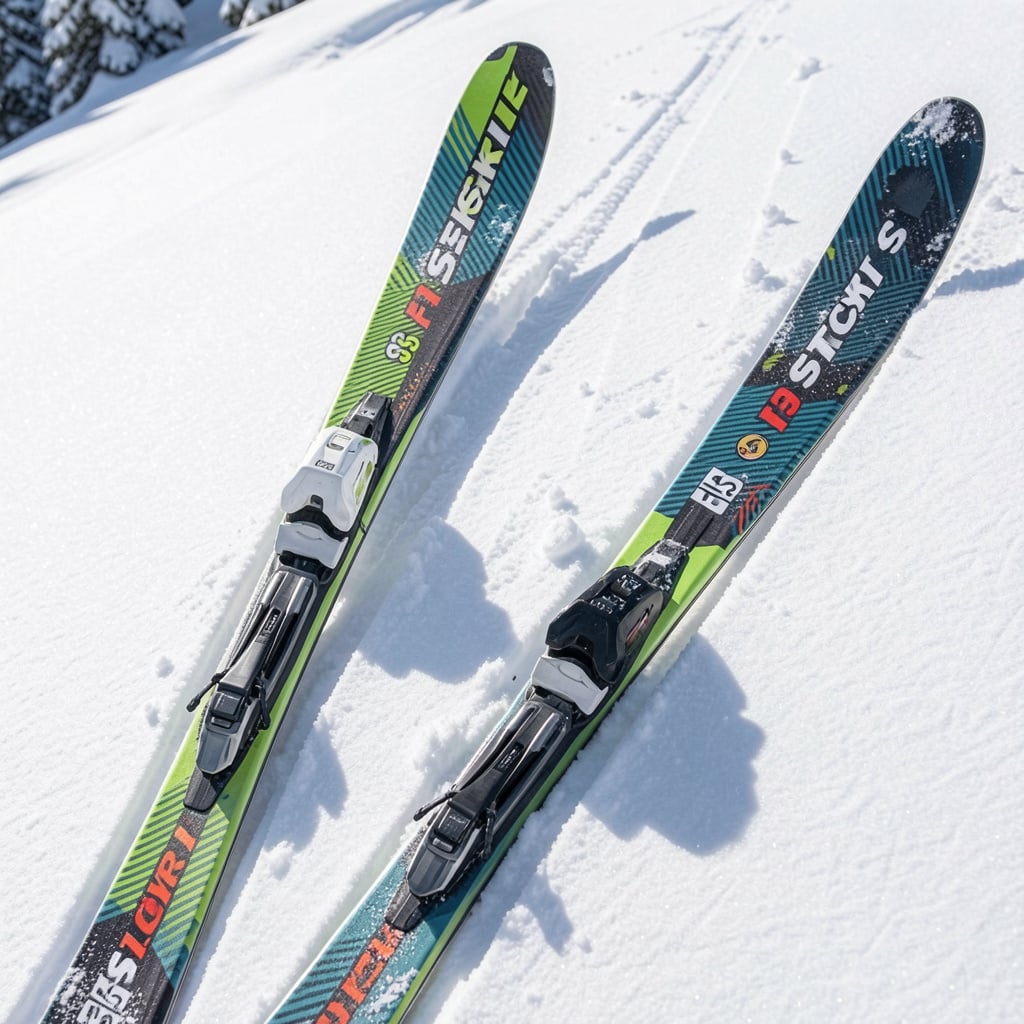
The Stöckli Laser FIS GS and Laser FIS SL are not competing products. They are purpose-built for different disciplines, and the right choice depends on one question: what course are you taking?
If you race giant slalom, the Laser FIS GS is built for you. If you race slalom, the Laser FIS SL is the choice. The differences that define each ski on snow are worth understanding before you buy, especially if you are choosing a single ski for club racing or deciding which model fits how you actually compete.
Peak Performance carries the full 2027 Stöckli FIS lineup at racer pricing, including adult and junior versions of both models.
Both skis are built to FIS specifications using Stöckli's sandwich construction: wood core, titanal laminates, and a racing-graphite base. The construction approach is shared. The geometry is not.
The Laser FIS GS is built for medium- to long-arc skiing at speed. It runs to FIS GS geometry standards, with a waist around 65mm and turn radii suited to gate-dense GS courses. The ski is full camber, torsionally rigid, and built to hold a line through the finish of a high-speed arc.
The Laser FIS SL is built for rapid edge changes on a tight, technical course. It runs to FIS SL geometry with a 66mm waist and a radius range of approximately 12.2 to 12.4 meters. It initiates quickly, changes edges with precision, and rewards a centered, active slalom stance.
Two millimetres of waist width and several meters of sidecut radius look minor on paper. On a race course, the difference is the entire point.
The Laser FIS GS is a speed ski. Its FIS-compliant geometry stores energy through a medium to long arc and releases it at the turn's finish. At GS speeds on hard snow, it feels composed and planted. The titanal laminates absorb surface feedback from Killington's icy morning groomers, and the full camber profile keeps maximum edge contact through the arc.
This is a true FIS race ski. It performs best when driven with proper technique at GS speeds. Club racers and development-level athletes working toward full FIS competition will find it rewards clean movement patterns and builds the technical foundation that GS demands.
For junior athletes, the FIS Jr. GS and FIS Tweener GS offer the same race-spec construction in lengths and builds scaled to developing racers, with length-specific sidecut radii from 13.5m at 144cm to 19.5m at 168cm.
Best for: Giant Slalom racing at FIS and USSA levels, junior racers in club programs, and development athletes building GS technique.
The Laser FIS SL is a precision tool. The narrow waist and FIS slalom sidecut produce a radius of approximately 12.2 to 12.4 meters, pulling the ski through the fall line and accelerating through short arcs with authority. The titanal construction keeps it composed under pressure despite its agility, and the Race Core with added beech wood delivers stability through rapid direction changes.
The mounting point is set slightly forward to accelerate the turn reaction. On a technical slalom course, the ski initiates fast and finishes decisively. It rewards the cross-under technique that slalom demands, with consistent rhythm from gate to gate.
For junior athletes, the FIS Jr SL and FIS Tweener SL bring the same FIS-spec build to shorter lengths and lighter constructions suited to developing racers. The Tweener geometry bridges the gap between junior and senior FIS specifications for athletes moving up.
Best for: Slalom racing at FIS and USSA levels, junior racers in development programs, and technical skiers who focus on precision on tight courses.
|
Laser FIS GS |
Laser FIS SL |
|
|
Waist (approx.) |
~65mm |
66mm |
|
Radius range |
FIS GS compliant |
~12.2 to 12.4m |
|
Construction |
Sandwich, titanal, wood core |
Sandwich, titanal, Race Core + beech |
|
Camber |
Full camber |
Full camber |
|
Junior option |
FIS Jr GS, Tweener GS |
FIS Jr SL, Tweener SL |
|
Primary terrain |
GS course, firm groomers |
SL course, technical piste |
|
Turn character |
Medium to long arcs |
Short, rapid arcs |
|
Best for |
GS racers |
SL racers |
Browse the full Stöckli race ski lineup at Peak Performance, including FIS options and junior sizes in both disciplines.
If you race one discipline, buy the ski matched to your event. Alpine racing regulations, even at club level, expect skis suited to the course, and training on the right tool for each discipline builds better technique over time.
If you race both and can only afford one ski, the Laser FIS GS handles a wider range of conditions. A GS ski can be driven through shorter turns with effort. A slalom ski does not produce stability at GS speeds regardless of technique.
For juniors moving between categories, the Tweener models are worth discussing. The FIS Tweener GS and FIS Tweener SL are designed for athletes transitioning between junior and senior FIS specifications, offering a geometry that works across that developmental gap.
The ski is only part of the setup. Structure and edge angles finish the job, and getting this wrong costs time on course regardless of equipment quality.
At Peak Performance, Laser FIS GS skis receive a tech base structure, and Laser FIS SL skis receive a hoop structure, applied on the Wintersteiger Jupiter machine. Tech is a crosshatch pattern matched to how GS skis glide on firm and icy surfaces. Hoop is a linear pattern suited to the rapid edge transitions slalom demands.
GS base angles run 0.7 degrees, and SL runs 0.5 degrees, with side edges at 3 degrees for both as a starting point. These are starting positions. Peak can tune to very specific angles based on skier preference and conditions, including variable edge — where the angle of the base edge varies along the ski's length, typically sharper underfoot and slightly less sharp at the tips and tail. It is worth discussing with the team what works for your skiing and your home mountain.
Running a GS structure on a slalom ski, or the reverse, affects how the ski behaves on every surface you encounter, including Vermont ice. Structure choice matters on race day.
The race tuning service at Peak Performance is available overnight, with a 3 PM drop-off for next-day pickup. The race base structures page covers the three structure options and how each is matched to disciplines and conditions.
What is the difference between FIS GS and FIS SL skis?
FIS GS skis are built for medium to long arcs at higher speeds, with geometry that complies with giant slalom course regulations. FIS SL skis are built for short, rapid arcs on technical gate-dense courses, with a tighter sidecut radius and narrower waist designed for quick direction changes. The disciplines require different technique and movement patterns, which is why competitive racers use dedicated skis for each event.
What is a tweener ski?
A Tweener is a Stöckli FIS ski with geometry designed for athletes transitioning between junior and senior FIS specifications. The FIS Tweener GS and FIS Tweener SL sit between the junior and adult FIS models in geometry, making them suited to developing racers who have outgrown junior specs but are not yet racing full FIS senior dimensions.
Can I use the Stöckli Laser FIS GS for slalom?
Technically yes, but the GS radius does not produce the quick, short arcs slalom demands. For club racing and higher levels of competition, a dedicated FIS SL ski is the right choice for slalom events.
What length FIS SL should I choose?
FIS SL skis run 155, 160, and 165 cm. Length selection depends on body size, FIS category, and course set. Stronger athletes and those competing at higher levels typically choose the longer options for added stability and energy return.
Do I need to retune between GS and SL events?
Yes. Discipline-specific structure and edge angles are part of a complete race prep. If you are competing in both disciplines at a serious level, separate skis with dedicated prep are the standard approach.
The GS vs SL ski setup guide on The Edge covers how to build a complete GS or SL setup, including bindings, boots, poles, and tuning schedules.
Comments
Be the first to comment...