


Cart
You have no items in your shopping cart
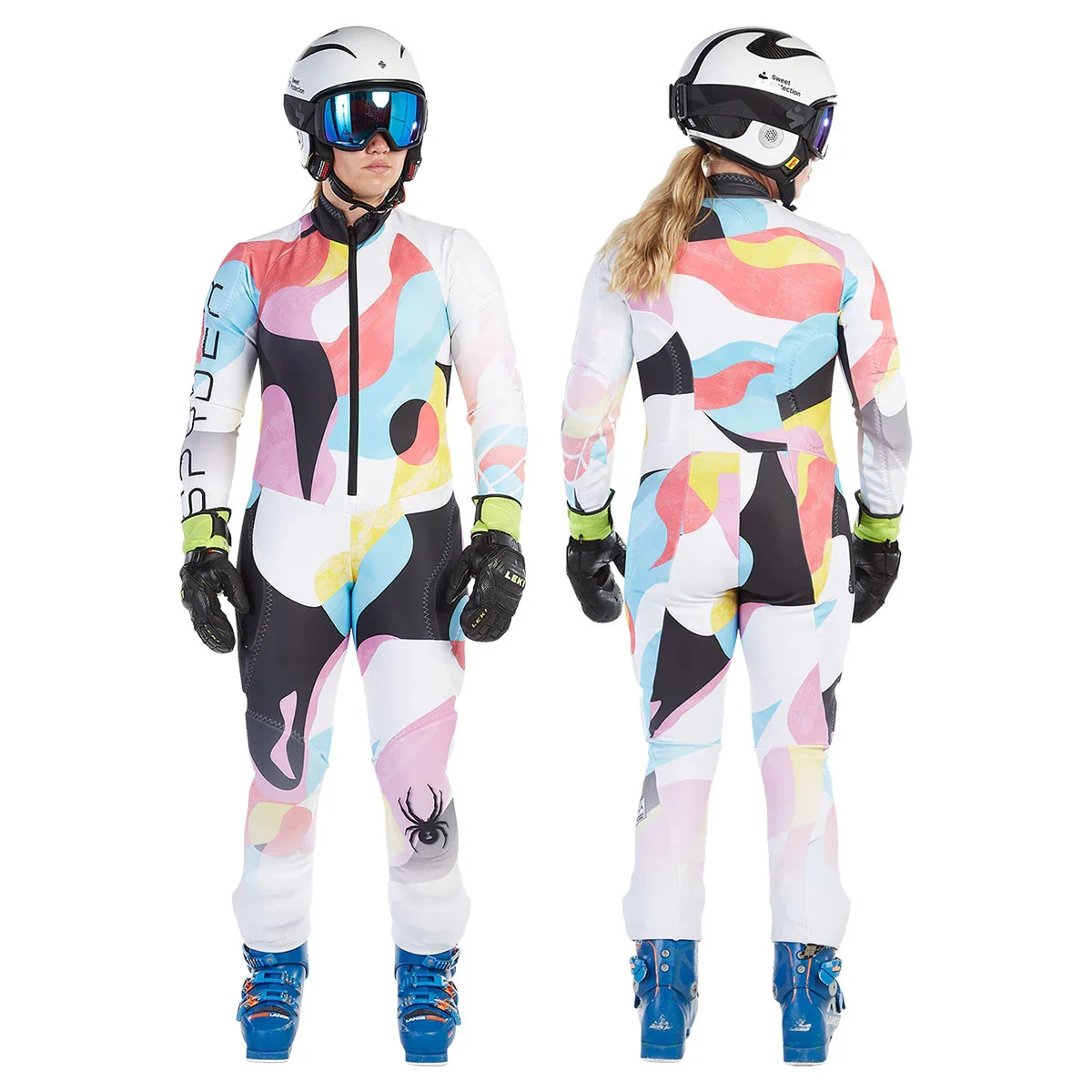
For most junior racers competing in giant slalom and slalom, a padded GS suit is the right choice. The padding is built into the suit and protects against gate contact on every run.
Unpadded speed suits are designed for downhill and super G, where separate body armor is worn underneath instead. If your racer is competing in technical events, a padded GS suit is the best choice.
When you shop for a race suit, two categories show up on most pages: padded and unpadded. For parents who are new to race gear, the difference may not be immediately clear. This guide explains what each type is for, what the padding covers, and how to choose based on your racer's course use.
Padded GS race suits are built for giant slalom and slalom. In technical events, racers make direct contact with gates on almost every turn, using their arms and body to deflect them through the course. The integrated padding absorbs that impact throughout a full training day and on race day.
Standard padding in a GS suit covers:
Each pad is positioned over the body part it protects. The suit holds everything in place during movement, so the pads are where they need to be when contact happens, not shifting or bunching mid-run.
Most junior racers competing at the club, regional, and state level are racing GS and SL. A padded GS suit is the standard setup at that stage.
Unpadded suits, called DH suits or speed suits, are designed for downhill and super G. In speed events, gates are hinged and deflect away from the racer on contact, so built-in limb padding is not the priority the way it is in technical events.
Without foam or structured panels, the fabric in a speed suit has more stretch. That allows for a tighter fit, which cuts aerodynamic drag at the speeds downhill racers reach. The tradeoff is protection: an unpadded suit has none.
A racer using a speed suit in a GS race would need arm guards and a padded undergarment called a stealth layer to replace what a GS suit integrates directly. A back protector is still required separately regardless of suit type.
Speed suits are the right choice at higher competitive levels where SG and DH are part of the schedule. For most junior racers starting out, they are not the right first purchase.
| Padded GS Suit | Unpadded Speed Suit | |
|---|---|---|
| Primary discipline | Giant slalom, slalom | Downhill, super G |
| Integrated protection | Upper arms, forearms, hips, lower back, thighs, shins | None |
| Fit style | Snug with structured padding panels | Tighter, higher stretch throughout |
| Gate contact coverage | Built in | Requires separate arm guards and stealth layer |
| Back protector still needed | Yes | Yes |
| Best for junior club racers | Yes | Only if racing speed events |
| FIS-certified options available | Yes | Yes |
Even in a padded GS suit, a back protector is a separate piece of equipment. The suit covers the arms, hips, and lower body. It does not protect the spine. A back protector runs from the base of the neck to the tailbone and absorbs impact force in a crash. At most junior competition levels, clubs require one or strongly recommend it for all training and race days.
The back protector needs to fit correctly with the race suit on top. Always size the suit with the back protector on underneath. The zipper should close without pulling, the collar should not gap, and the racer should be able to get into a full tuck without the back riding up.
Some junior GS racers also add a padded stealth layer under the suit for extra upper-arm and shoulder protection during heavy gate training. This is optional at most junior levels but adds meaningful coverage. For back protection options, see our back protection collection.
For the large majority of junior racers at Killington and across the Northeast, the answer is a padded GS suit. Club races, USSA regional events, and state competitions are almost entirely technical: GS and SL. The integrated padding is exactly what those disciplines require.
An unpadded speed suit becomes relevant when a racer is competing in SG and DH at a higher level. At that point, the coach and club will guide the gear decision. It is not a choice most junior families need to make when getting started.
Browse our junior GS race suits or the full race suit collection to see what we have in stock. Not sure what fits your racer's schedule? Call us at 802-422-9447 or stop in, we're happy to help you sort it out. We work with local ski clubs and academies, such as Killington and Pico Ski Club, every season and can point you in the right direction.
No. GS suits have integrated padding for gate contact protection. DH and speed suits are unpadded and rely on separate body armor worn underneath. Most junior suits sold for club and regional racing are padded GS suits.
Yes, but they would need separate arm guards and a padded stealth layer underneath to replace the protection a GS suit integrates. For most junior racers, a padded GS suit is the simpler and more practical choice.
A moisture-wicking base layer and a back protector. On colder days, a thin thermal layer. Some racers also wear a padded stealth layer for extra upper-body protection during gate training.
No. Race suits are not insulated. They are designed for aerodynamics and gate protection, not warmth. Racers layer a thermal base layer under the suit and use zip-off training pants and a light jacket between runs to stay warm.
No. GS suit padding covers the arms, hips, and lower body. The spine is not protected by the suit itself. A separate back protector is required and should be worn for all training and race days.
Comments
Be the first to comment...