


Cart
You have no items in your shopping cart
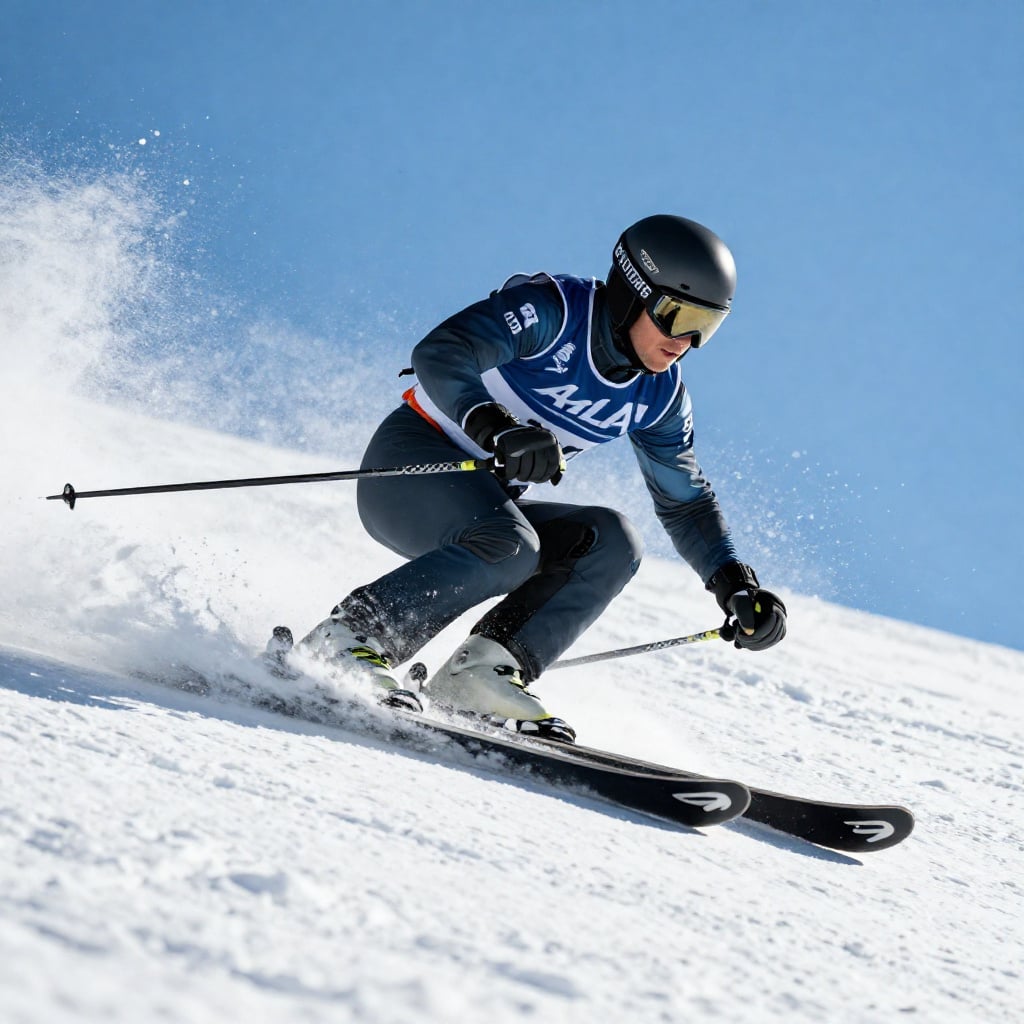
Eastern ice is not a preference or a terrain category. It is a daily condition. At Killington, the February morning groomer is often a sheet of refrozen corduroy with exposed ice patches on the fall line pitches. Skis that perform well in that environment are built for it deliberately, not because they are a wide, softer option that "handles all conditions." For a racer or a strong freeskier who actually wants to hold a line on hard snow, the Stöckli race lineup is one of the few choices built specifically to work here.
Western hardpack and Vermont ice are not the same surface. Western groomed snow is typically firmer than powder but still has some give. Vermont morning ice, particularly after a cold night on a groomed pitch, is brittle and unforgiving. The ski encounters ice patches mid-arc, not in controlled succession.
What the ski needs to manage that surface comes down to four things. First, full camber: rocker reduces effective edge contact, which is precisely the wrong trade on ice. A fully cambered ski keeps the entire running edge engaged with the snow. Second, a narrow waist: a race ski waist of around 65mm concentrates pressure on the edge more directly than a wide platform does, which produces better bite. Third, torsional rigidity: a ski that flexes across its width under load will lose edge hold at the tip or tail when the surface gets hard. Fourth, damping: metal laminates absorb the micro-vibration that ice generates, keeping the ski quieter and the edge contact cleaner through the turn.
Stöckli race skis are built around all four. That is not an accident. It is the result of a race program that tests on Alpine courses, many of them on hard European snow, and delivers those findings directly into the production ski.
Rocker profiles improve float and initiation in soft snow by reducing the ski's effective edge length at rest. On ice, that same quality becomes a liability. A ski with significant tip or tail rocker has less edge contacting the snow surface when loaded, which means less grip at the moment it matters most.
Full camber keeps the entire base in contact with the snow until weighted, then springs into the turn with consistent contact from tip to tail. Every model in the Stöckli Laser FIS race lineup runs traditional full camber. On Killington's Race Arena or the Superstar pitch early in the morning, that contact profile is what separates a ski that holds from one that wanders.
Laser FIS GS — steep icy groomers and GS race courses
The Laser FIS GS is built for medium to long arcs at speed, with FIS-compliant geometry and a waist around 65mm. On long, open pitches like Outer Limits or on a GS race course, it stores energy through the arc and releases it at the bottom of the turn. The Carbon Steering Control (CSC) layer keeps the tip composed at speed, and the titanal laminates absorb the surface feedback that would otherwise translate into chatter. On ice, it holds a line without drama.
This is the ski for skiers who prefer long, fast turns and want it to work with them rather than against the terrain. At GS speeds on Vermont ice, it is one of the most composed options available.
Laser FIS SL — technical terrain and slalom courses
The Laser FIS SL runs a 66mm waist with a radius of approximately 12.2 to 12.4 meters. The narrow waist changes edges quickly. On technical, gate-dense terrain or tight pitches where the turns come fast, this ski stays planted and drives through the finish of each arc with consistent edge hold.
The titanal construction dampens the harshness of Vermont ice, which means the Laser FIS SL can handle a full day of eastern conditions without becoming fatiguing. For a slalom racer or a freeskier who prefers short, precise turns on hard morning snow, the Laser FIS SL is the appropriate model.
FIS SG — for the skier ready to step into speed events
Peak Performance also carries the Stöckli FIS SG for athletes competing in Super-G. Built to FIS speed geometry, it handles the sustained speeds and longer arc demands of SG courses with the same titanal damping and full camber profile that makes the GS and SL so effective on eastern snow. Browse the full Stöckli lineup at Peak Performance to see current inventory across all models.
Buying the right ski solves half the problem. The other half is how it is prepared.
A Stöckli race ski shipped from the factory has a base grind and edge angles suitable for general conditions. For Killington hardpack and ice specifically, that is not the final setup. The base structure and edge bevel need to match the surface, and the edge sharpness has to be maintained more aggressively than most recreational skiers expect.
At Peak Performance, FIS GS skis receive a tech base structure, and FIS SL skis receive a hoop structure, applied on the Wintersteiger Jupiter. Tech is a cross-hatch pattern that manages water film on firm snow without creating suction on icy patches. Hoop is a lineal pattern better suited to the rapid edge-to-edge transitions slalom demands. Running the wrong structure for the discipline changes how the ski glides before the edge even engages.
Edge angles are set to 0.7 degrees base for GS and 0.5 degrees base for SL, with side edges at 3 degrees for both as a standard starting point. These are starting positions. Peak can tune to very specific angles based on what each skier wants, and that includes variable edge — where the base edge angle changes along the ski's length, typically sharper underfoot and a little less sharp at the tips and tail. It is worth a conversation with the team about what works for your skiing and your home mountain.
If you are racing at Killington or preparing for a USSA or FIS event in Vermont, the race tuning service handles overnight prep with a 3 PM drop-off for next-day pickup. The race base structures page explains the three structure options Peak offers and how each is matched to conditions.
A few direct decision points:
If you race GS, ski the Laser FIS GS. If you race SL, ski the Laser FIS SL. The disciplines require different tools and training, and the matching skill builds the right movement patterns.
If you are a strong freeskier on Killington's groomers and want the edge hold of a race ski without racing gates, the Laser FIS GS is the right starting point. It rewards a longer arc and speed on open terrain.
If you are unsure, come in. The team at Peak has skied both and tuned thousands of pairs for Killington conditions. Matching the skier to the model accurately matters more than the spec sheet.
What skis are best for icy conditions?
For recreational skiers, narrow-waisted carvers with full camber and titanal laminates perform best on ice. For racers, a purpose-built race ski matched to the discipline is the correct choice. The Stöckli Laser FIS GS and Laser FIS SL are among the most capable options for eastern ice, specifically because of their full camber profile, titanal construction, and torsional rigidity.
Is camber or rocker better for ice?
Camber. Rocker reduces the effective edge length in contact with the snow, which improves float in soft snow but reduces grip on hard surfaces. Full camber keeps the entire running edge engaged through the arc, which produces more consistent edge hold on ice.
What ski width is best for icy conditions?
Race skis are typically around 65mm at the waist, which concentrates edge pressure directly and precisely on firm snow. That narrow platform is a key reason Stöckli FIS race skis perform so well on Vermont ice.
Are Stöckli race skis good for recreational skiing on ice?
Yes, for strong intermediate to expert skiers. The Laser FIS GS and Laser FIS SL ask for commitment and speed to work at their best, but a strong recreational skier on Killington's groomers who wants the edge hold and composure of a race ski will find both models reward the technique they already use.
What base structure is best for hard snow at Killington?
For GS, a tech structure handles Vermont hardpack and ice well. For SL, a hoop structure suits the rapid edge changes that the discipline demands. Both services are available at Peak Performance through the race tuning service, applied on the Wintersteiger Jupiter.
Comments
Be the first to comment...